Showing posts with label News. Show all posts

Wednesday, March 15, 2017

GREAT SMOKY MOUNTAINS ALIVE AND WELL FOLLOWING HISTORIC WILDFIRE

On November 28, 2016, a wildfire of unprecedented scale swept through the Great Smoky Mountains National Park (GSMNP) and spilled over into the surrounding community of Gatlinburg, claiming 14 lives and burning a total of 17,904 acres, and forever changing the lives of those in the greater GSMNP community. Today, spring is coming—has come. Gatlinburg is bustling. And it is clear that the ecosystem will recover smoothly, and the community, though branded with the memory of hometown disaster, will return to its position as a viable tourist destination, stronger for it.

Photo by Matt Reilly

    What began as a small 1.5-acre fire smoldering slowly in the duff—the layer of organic matter on the forest floor—atop the popular Chimney Tops on November 23, 5.5 miles from Gatlinburg, was rapidly bolstered into a raging blaze four days after Thanksgiving when winds registered up to 87 MPH ripped through the Smokies, already bone-dry due to several months of drought.

    The scene was chaotic and undoubtedly sorrowful; and the impacts on businesses, families, and livelihoods cannot be downplayed. However, despite the sensationalized portrayals of the situation that has colored people’s perceptions of what remains of the GSMNP, the reality of the impacts of the fire is hopeful.

    Of the Park’s 522,427 acres, only 11,410 acres—roughly 2 percent—were consumed by the fire. What’s more, because of the high winds that contributed to the rapid magnification of the fire, about 65 percent of the area that was consumed was only very lightly burned, resulting in burned undergrowth and the bases of trunks, but very few dead trees. The area of the Park that was burned intensely—about 1,000 acres—represents just 0.2 percent of the entire area.

    Bringing even more hope, GSMNP Management Assistant, Dana Soehn, pointed out that “The fire occurred outside of the growing season, so most vegetation was dormant. Trees and shrubs were only highly effected in about 10 percent of the burned area.” In a brief walk through the forest, adjacent to one of the most heavily burned areas, buds are becoming visible on even the smallest of saplings.

Photo by Matt Reilly

    The soil within the burn zone is relatively intact, too. “Duff layers, root mats, and seed banks are mostly intact in over 90 percent of the burn area,” said Soehn, and it shows. Daffodils, grasses, and groundcovers have emerged from the now moist ground as some of the first signs of spring.

    To ease the worries of those who value the Park for its wildlife viewing opportunities, wildlife have shown no signs of suffering. According to GSMNP Wildlife Biologist Bill Stiver, only two of an estimated 1200 black bears inhabiting the Park are known to have perished due to the fire. Many, in fact—including the majority of the black bear sows—were had already begun hibernation when the fire swept through.

Photo by Matt Reilly

    Species that prefer open woodlands—like bats, of which the Park houses 13 species, 4 of which are critically endangered within the Park—will find refuge in the newly created habitat, as will deer, which thrive around edge habitat and in new growth forests. Turkeys were observed in some of the burned areas almost immediately following the fire. A winter burn affects a stronger spring green-up and a long sightline, which provide the birds with food and security.

    The fisheries within the Park were perhaps the least effected, though 55 miles of stream were engulfed in fire. “No impacts from fire relative to nitrates, sulfates, pH, or temperature have been found,” said GSMNP Fisheries Biologist Matt Kulp, citing 20 years of previous baseline data. “There has been no significant difference in sediment in the streams, either,” said Kulp, as he released a healthy wild rainbow electroshocked from a Little Pigeon River tributary stream.

Photo by Matt Reilly

    The 31 miles of trails closed because of impacts from the fire have mostly been repaired and reopened to the public.

    Recreation, in the form of wildlife watching, fishing, and hiking, will resume in the Park this spring, providing little reason for visitors to postpone vacations and trips to the region. The community, which sees 11.3 million visitors annually, remains fully functional. In fact, record visitorship for the month of December was recorded the month following the fire.

    Ecologically speaking, wildfire is a natural event intrinsic to eastern ecosystems, and may even be interpreted as beneficial to the diversity of habitat and wildlife within the Park. What’s more, the Chimney Tops 2 wildfire will offer a unique opportunity for visitors and scientists to study and become familiar with wildfire, which has been largely avoided through management for recreation. The GSMNP is, and will continue to be, a natural treasure in the heart of the East.

    Want to help the Smokies? Go see it for yourself.    

*Originally published in The Rural Virginian

OUTDOOR RETAILER DUMPS UTAH OVER PUBLIC LANDS DISPUTE

On Tuesday, February 14, Patagonia, a domineering outdoor brand, announced that it would not continue to attend the biannual Outdoor Retailer trade show, historically held in Salt Lake City, if it didn’t relocate from the state of Utah. The reason? Utah’s stance on federal public land conservation.

Utah—66.5 percent of which is comprised of federally owned public land—is a frontrunner in the movement to transfer federal land to the states. Many sportsmen and women are concerned that following through with this intent will result in the states’ massive selling-off of these once-public lands to private owners for development or personal ownership, eliminating the ability to use them for recreation.

    In late January, Utah Representative Jason Chaffetz introduced legislation in Congress that would revoke legal authority from Bureau of Land Management and Forest Service authorities, followed by another bill to sell off 3.3 million acres of public land in 10 states across the west. Shortly thereafter, yet another Utah Congressman, Sen. Orrin Hatch, sparked national research into the possibility of the 
    
    Trump administration rescinding protection of the 1.35 million-acre Bear Ears National Monument designated by Obama as a lame duck. Gov. Herbert then submitted a resolution urging the newly-installed administration to do just that.

    Following Patagonia’s ballsy maneuver, on Thursday, February 16, the Outdoor Industry Association issued an ultimatum to Republican Utah Gov. Gary Herbert: Cease efforts to scrap Roosevelt’s Antiquities Act, rescind Bear Ears National Monument, and transfer federal public lands to the states, or they would sever their ties with Utah and take their heavyweight trade show elsewhere.

    Just hours following the conference call, the Outdoor Retailer show announced that they would be leaving Salt Lake City following the summer of 2018.

    Outdoor Retailer’s Summer Market is the most comprehensive and lucrative trade show of its kind, annually attracting thousands of vendors marketing gear and apparel for outdoor and adventure sports including hiking, backpacking, cycling, climbing, water/paddle sports, fishing, mountain biking, running, adventure travel, and more. All of these sports depend upon public lands for their enjoyment, making Utah’s public lands political atmosphere particularly offensive to the show.

    The show annually funnels $50 million into Utah’s economy, making it a true heavyweight attraction for the state. Patagonia’s igniting move was intended to raise awareness of the show’s political and economic contradiction.

    “Patagonia will no longer attend the Outdoor Retailer show in Utah and we are confident other outdoor manufacturers and retailers will join us in moving our investment to a state that values our industry and promotes public lands conservation,” Rose Marcario, CEO of Patagonia, wrote following the official announcement.

    The high-profile company was right in their expectation, and the outdoor sporting public has widely praised them for their stewarding leadership regarding this important issue, proving quite plainly that on issues involving intangible virtues, money trumps talk and affects change most effectively.

    Though the show will convene in Salt Lake in the summer of 2018, Outdoor Retailer is actively in search of a new home, and is taking bids from other states that have a strong tradition of outdoor pursuits and public land celebration. Utah is being ignored, which has created internal conflict within the state’s government, severely crippled by the loss of so much annual revenue.


    Hopefully, this loss will inspire Utah’s representative leadership to rethink the value of outdoor recreation and the public lands that permit them. Given Utah’s leadership on the public lands transfer issue, their conversion may be a pivotal moment in this land war that will prove to be nothing less than vital for the future of outdoor sports in America as we currently and freely enjoy them.

*Originally published in The Rural Virginian

Wednesday, March 8, 2017

AUGUSTA LEADS LOCAL CHARGE AGAINST NATIONAL FOREST FRACKING

In late February, the Augusta County Board of Supervisors voted to ban hydraulic fracturing by way of a zoning ordinance, making it the first county in the Old Dominion to totally prohibit the invasive natural gas drilling practice. The move has been praised by sportsmen and conservation groups, as it effectively protects clean water and wildlife in the county, which includes 193,000 acres of the George Washington National Forest and countless headwater streams.
A fracking drill pad in the Pine Creek Valley of Pennsylvania. Photo by Matt Reilly.

    Hydraulic fracturing, or “fracking,” is the process of pumping pressurized chemicals, water, and sand down drill holes in the ground to crack open fissures in shale which contain small amounts of natural gas.

    The practice poses potential public and environmental health issues, since spills threaten to contaminate ground or surface water with hydrocarbons and other fracking fluids. The chemicals included in the pressurized fracking fluids are often undisclosed, and different companies use different mixtures. Such lack of transparency has been cause for suspicion.

    Furthermore, constructing a drill pad requires the clear-cutting of several acres of forest. Lights on the drills are often left on at night, illuminating surrounding forest and disrupting normal wildlife habits.

    But the impacts of fracking are hardly felt just at the drill site. Infrastructure is necessary to construct the pads and to shuttle materials and product. Roads must be constructed for the large trucks that are used to haul equipment and the actual drill to the site. Pipelines—akin to the proposed Atlantic Coast Pipeline—are necessary for funneling captured gas to market. Both of these structures inevitably cross many headwater streams.

    Considering the current need to harness new energy sources in the United States, and considering the alternative strategies, fracking natural gas doesn’t stand to be an environmental no-go, as continued coal mining could be labeled. However, it must be done responsibly and transparently. That means knowing where fracking is a responsible choice and where it is not.

    In the Blue Ridge Mountains of western Virginia, the construction of roads and natural gas pipelines crossing headwater mountain streams would be a risky gamble of our prized native brook trout—the official state fish—, the ecological health downstream, and the state’s water supply. Nearly four million people—whether they know it or not—source their drinking water from National Forest land in Virginia, including those living in Richmond and D.C.

    What’s more, much of Augusta’s geology is “karst,” meaning it is comprised of soluble rock, commonly limestone and dolomite. Thus, any pipeline leak would be very likely to contaminate groundwater in a large area and eventually reach surface water.

    Despite the potential dangers, the National Forest Service allows hydraulic fracturing on forest lands across the country. However, following a November 2014 announcement, the current plan for the George Washington National Forest allows hydraulic fracturing on 177,000 acres, where private mineral rights and leases to oil and gas companies are pre-existing.

    Augusta County’s decision to ban such activities is, in fact, legal. The Virginia Code grants local governments the authority to “regulate, restrict, permit, prohibit, and determine” land uses, such as “the excavation or mining of soil or other natural resources.”

    Still, the decision to install an outright ban on fracking may ruffle some industry feathers, though some experts speculate that a ban will be more effective in deflecting potential lawsuits than a seemingly always-porous regulatory process. Regardless, considering what we have to lose in the mountains of Augusta County, the ban is essential.


    Augusta County’s assertion of a ban on fracking is a clear and confident placement of the value of natural resource health and clean drinking water over the potential gain offered by natural gas fracking.

*Originally published in The Rural Virginian

Wednesday, October 26, 2016

ELK RETURN TO AUTUMN IN VIRGINIA

A fire burned on jagged mountain crests above the landscape of a reclaimed strip mine, from within the crimson and apricot leaves of expiring hardwoods. The setting sun painted a halo of orange on the pointed peaks, topped by the glowing pale blue sky of an early-to-rise hunter’s moon, casting silhouettes of mountains and coal fields spanning west into Kentucky, north into West Virginia, and south and east into the more populous regions of southwest Virginia’s Mountain Empire.

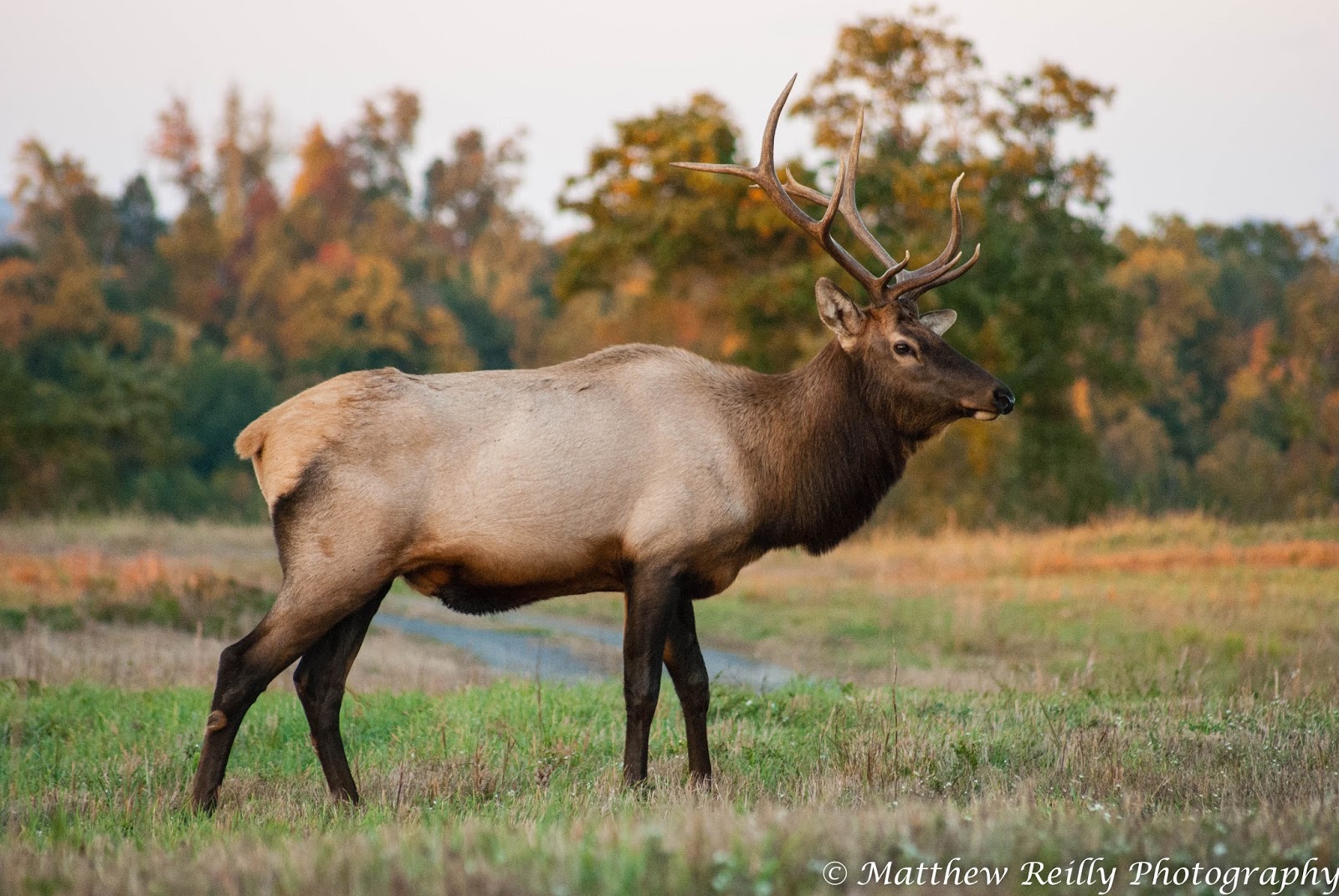
5x5 bull elk taking stock of his field in Buchanan County, Virginia. Photo by Matt Reilly.
    After glassing from an opposing mountain vantage point and driving hurriedly over gravel and tall grass, John Taylor of Vansant, Virginia, a volunteer with the Southwest Virginia Coalfields Chapter of the Rocky Mountain Elk Foundation (RMEF), brought his lifted, dark emerald Excursion to a grumbling halt, eyes fixed on a few dozen hide-colored bobs populating a rolling fescue field.

    I’d been there before, and recognized the terrain bathed in clear moonlight and the palpable feeling of natural history in the making. Only this time, the mood was much wilder. My previous visit was two and a half years ago. At 2:00 in the morning, I stood in the company of Virginia Department of Game and Inland Fisheries (VDGIF) staff and RMEF volunteers—their eyes glued to an enclosure, on which headlights born of Kentucky would soon appear hauling a livestock trailer containing 45 of the hide-colored bobs.

    That young April morning of 2014 marked the last installment of a three-year plan to restore elk to the state of Virginia. A subspecies of elk, the eastern elk, is native to western Virginia, but was extirpated by early human inhabitants—the last individual killed in Clarke County in 1855. Since then, in recent history, there have been a few failed attempts at reestablishing a viable herd in the Old Dominion, but each met a calculable end. However, the 72 Rocky Mountain strain individuals trucked in from Kentucky to the reclaimed strip mine site in Buchanan County, and protected within the designated “restoration zone” of Buchanan, Dickinson, and Wise Counties, has shown tremendous success, and now boasts a herd of 160-165 individuals.

    Camera cradled, I climbed from the Expedition, followed by Taylor, and stalked quietly behind a screen of brush to subtract twenty yards from the distance separating us from the elk. Light was insufficient for my camera, but I already had pictures. I found more light through the glass of my binoculars.

    The hide-colored bobs grew hide-colored ribs and shoulders; cinnamon bellies and legs; and shaggy, chocolate manes. Some grew antlers branching once, twice, three and four times from each main beam. All grew wild eyes.

    Then an old, stately bull emerged from a treeline just over a fescue knob.

    “I’ve never seen him before,” Taylor breathed. “He’s not one of ours.”

    His eyes fell on me, then on the dozens of cows grazing in the field. The rut is winding down, but the need to breed is still in their psyche, and he likewise began rounding up a few stray females. He was shaggy, totally chocolate—almost black—with a 6x6 rack, beams and tines dark, save for ivory tips.

    A few satellite bulls milled about the field, paying more attention to the dominant bull than to the females in the herd. One younger bull—a lanky 4x4—was left behind, once the chocolate bull had rounded up his harem. The dominant bull turned to face him, and slowly began walking towards the bull, occasionally throwing his rack back and extending his neck, as if to bugle, but without sound.

    The gap between bulls was closed to a few feet. The 4x4 looked puzzled, and the chocolate bull passed him by without incident. As if told to keep up, the 4x4 then trotted towards the treeline where the group of cows were exiting the field. The chocolate bull followed suit, and in the fading light, made a few attempts to mount one of the trailing cows.

    The woods just inside the opposing treeline were torn apart as a massive 7x7 bull charged into the field, pounding the ground with hooves driven by 700 pounds of muscle, gleaming rack thrown back in aggressive trot. He charged into the center of his harem, reclaiming ownership, and booting the chocolate bull from the field and into sexual and social exile in the hollow below.


    Turning to take a visual survey of his territory, his cows swirled around him as he tossed his headgear back and, with shaggy mane outstretched, hurtled a piercing, cocked-jawed, guttural screech into the night that rattled my heart on its arteries like a yellowing leaf blasted by a November wind. There was crashing and hoof stamping where there hadn’t been for almost two centuries, and a home-again drama of the autumn woods disappeared as quickly as it unfolded into the moonlight-cloaked thicket.

*Originally published in the Rural Virignian

Wednesday, August 31, 2016

A TACTICAL APPROACH TO THE UPCOMING SQUIRREL SEASON

As one with knowledge only of a life spent outdoors, I arrange my memories by seasons. By morning dew and the reflection of warm genesis on fresh leaves, I remember days casting dry flies to feisty brook trout and wild rainbows. By thick, starlit nights and the chug-chugging of a popper I recall extended summer evenings fishing for heavy bigmouths from a canoe. By the first chilly, gray morning in September, and the sight of yellow leaves adhered by mist to the rocks of a Blue Ridge Mountain hollow, I remember those days spent toting a .22 long rifle, ears perked to the sound of bushytail toes on bark. That morning is fast approaching.

Photo by Matt Reilly
    This Saturday, September 3, Virginian small game enthusiasts will be given the annual go-ahead to target their favorite quarry—gray squirrels, and the less prominent red and fox squirrels.

    The season on red squirrels and the widely distributed gray squirrels will run through February 28, statewide.

    Fox squirrels are legal game only through January 31, and can only be taken in the counties west of the Blue Ridge, and in the counties of Albemarle, Bedford, Culpeper, Fauquier, Franklin, Greene, Loudoun, Madison, Orange, Patrick, Prince William, and Rappahannock.
The traditional bag limit of a combined six bushytails remains in place.

Three Different Seasons


    Dedicated squirrel hunters enjoy pursuing game with a wide range of implements. Muzzleloaders, riflemen, shotgunners, archers, and airgunners all set their sights on bushytails, both from carefully scouted stands and conveniently located saplings during a still hunt. The right method for you is largely up to preference and ability. However, the Virginia squirrel season is a long one, and so it is worth noting the limitations and strengths of different tactics during the three distinct seasons the squirrel hunter will face between September and February.

    The month of September and early October I call the “early season”. Leaves and acorns still cling to the forest canopy, and squirrels haven’t yet been shot at. Often, this makes finding squirrels easy. They are loud, shaking large bunches of foliage while mining acorns from the treetops, and the foliage somewhat robs them of their bird’s eye view of the forest floor.

    I rarely hunt squirrels in September. In Virginia, the weather is generally still quite warm. However, when I do, I rarely stand-hunt. The squirrels are occupied and relatively stationary high in the treetops. Thus, my favorite way to hunt is to simply wander the woods with an eye on the sky, looking for roiling bunches of foliage. Once a squirrel is located, an easy stalk is usually all that separates one from a shot.

    The length of that shot varies by the cover you hunt, but keep in mind that it can be difficult due to foliage to get a clear shot with a small bore .22 rifle or an airgun. A 20 gauge with a modified choke can be an excellent choice for sorting through all those limbs and leaves, and is often my first choice in the early season.

    I call the “mid-season” that period starting in the latter days of October, and lasting until most of the fallen mast has been used up and there is snow on the ground—usually sometime in mid- to late-December. During this season, the squirrels have been educated a little, but they spend a significant portion of their day on the ground, scrounging for acorns. The forest canopy has thinned, and a longer, more precise shot it possible.

    During this period, stand hunting can be quite effective. Locate areas where there is a concentration of fallen mast, like a hardwood creekbottom or flat oak grove. White oaks tend to drop acorns earlier than red oaks, so know your local hardwood species, and pay attention to their mast-producing tendencies.

    A longer line of sight makes a .22 or air gun very valuable, and will provide more shots from a stand. The subtle crack of the rifle is also less alerting, compared to the invasive boom of a shotgun, enabling a shorter recovery to seclusion.

    The doldrums of winter I consider to be the “late season.” Food is scarce and the woods are bare. Squirrels are spooky and ranging wide. Leaves are crunchy due to cold. What’s more, groups of squirrels are often spotted chasing each other as a mating ritual.

Photo by Matt Reilly
    These reasons make me partial to a very slow still-hunt with a shotgun. Educated squirrels often stick tight to cover when approached, and make mad dashes for cover, making moving shots common. You may be lucky enough to have several squirrels chase each other to within range, in which case, multiple quick shots can pay dividends.


    Keep these variables in mind when planning your days afield this fall and winter chasing Virginia’s favorite small game species.

*Originally published in the Rural Virginian

Wednesday, August 17, 2016

BACKCOUNTRY HUNTERS AND ANGLERS MOBILIZING IN THE CAPITOL REGION

A group of passionate outdoorsmen and Backcountry Huntersand Anglers (BHA) members gathered at the Backroom Brewery in Middletown, Virginia on Saturday, August 6 to discuss important public lands issues in the East and the formation of a local chapter to include Maryland, D.C., and Virginia. The group, unofficially dubbed the “Capital Region Chapter” of BHA, once voted into existence by the organization’s national board, would become the first chapter in the American Southeast.

Backpacking in the Monongahela National Forest, almost one million acres of forested habitat in WV, within a few hours' drive of D.C. Photo by Matt Reilly
    Backcountry Hunters and Anglers is an organization of sportsmen devoted to the conservation of our public lands, and the subsequent continuation of our outdoor heritage. Founded upon an appreciation for wilderness, BHA speaks for those who benefit spiritually from the opportunity to hunt elk on foot or horseback in the Bob Marshall Wilderness, spend a week fishing for smallmouth bass in the Boundary Waters, and stare into a fire miles from the nearest road and feel what true wilderness really is.

    BHA is an organization brawny by individual passion and, likewise, is effective only because of the existence of local chapters. “BHA's success is built on our boots-on-the-ground volunteers and members,” said BHA President, Land Tawney. “Not only do they have deep passion to carry on our traditions, but they also have an intimate knowledge of their place and what needs to be done to protect it.” As such passionate people mobilize, influence increases dramatically at the state level through interactions with state wildlife agencies, federal agencies, and officials.
    
    Until rather recently, all of those state chapters have been solely in the West, owing mostly to the fact that public lands come in much greater volume West of the Mississippi. “While the majority of public lands are found in the west, public lands in the east are just as important,” said Tawney. “It is imperative that BHA expand its reach in the east to not only influence policy at a national level, but to also make an impact on the ground to make sure we have access to local public lands and the fish and wildlife habitat found within.”

    It’s celebrating public lands in the East and taking a stand on the issues that oppose them that has James Revercomb, member at large (there are not official titles within the group, yet) and owner of Roanoke MountainAdventures, excited about the burgeoning chapter’s future. “There are lots of people in this part of the country who don’t utilize the public lands we have,” he said. “So it’s exciting to see people getting behind this in the East. The more people—the more interest—the better”

    The group’s meeting in Middletown, which was open to BHA members and non-members both, went fairly informally. Attendants started off telling hunting and fishing stories, but quickly became enraptured in discussion issues such as habitat fragmentation, poaching in D.C., off road vehicle land abuse, and the Sunday hunting ban on public lands.

    “The energy was great,” said Tom Hartland, another member at large and meeting attendee. “When you meet other BHA members, you already know they share the same values, and you get along great.” That energy is contagious and likewise growing. “Some people even overheard us talking and expressed interest in what we are doing,” said Hartland.

    Another meeting is being planned for early in 2017, but for the time being, the Capital Region BHA group hopes to grow its numbers with flyers and word of mouth. Interested members and non-members should visit the “Capital Region Backcountry Hunters and Anglers Members” Facebook page, and check out the BHA national page, www.BackcountryHunters.org. The BHA national board will come to a vote on the proposed Capital Region chapter in the spring.


    Despite the vast majority of public land being in the West, as Tawney pointed out, the public lands we have here in the East are just as important, and need boots-on-the-ground volunteers to protect them. It is clear that there is a substantial number of passionate backcountry hunters and anglers within the capital region. However, there is currently no established BHA chapter to harness that passion and potential influence. The establishment of the Capital Region BHA chapter will be a contribution of existing resources to the national voice of sportsmen who care about the management of our public lands, which uphold and serve as an arena for the passing on of our classic traditions of hunting and fishing.

*Originally published in the Rural Virginian

Wednesday, August 10, 2016

PROPOSED REGULATION CHANGES TO SOUTH RIVER FORETELL EVOLVING FISHERY

Thanks to the persistent, concerted efforts of local anglers, the South River Fly Shop, and the Shenandoah Valley Chapter of TroutUnlimited (SVTU), Waynesboro’s urban trout fishery currently awaits the August 18th Department of Game and Inland Fisheries (DGIF) board meeting, where votes will be taken on two proposed regulation amendments that will alter the river’s fishing opportunities and potentially improve an evolving fishery.

South River Fly Shop guide Reed Cranford with a 25" brown from the South River Delayed Harvest Area.
    One amendment would replace the existing delayed harvest designation on two miles of river from North Park to Wayne Ave., with catch and release regulations.

    The second would adjust the existing 16-inch minimum size limit for trout and artificial lure-only restriction on the 5.5 miles of the South River Special Regulations Area, extending from the North Oak Lane bridge to a point 1.5 miles above Rt. 632 (the Shalom Road bridge), to a 20-inch minimum and a fly-fishing-only designation, more than doubling the amount of fly-fishing-only water in the state.

    Virginia’s delayed harvest system limits anglers fishing waters designated as such to artificial lures only, and requires catch-and-release, except for a window from June 1 through September 30 –when waters are too warm to hold stocked trout—when harvest is allowed and bait is permitted. So the question of delayed harvest versus catch-and-release year-round is dependent upon water temperature and quality.

    The proposed amendments’ position on DGIF’s schedule is a result of several years of advocacy from the local angling community, mobilized by SVTU and the South River Fly Shop. In 2012, the groups approached DGIF with the suggestion of making the proposed regulation adjustments to the South River. In defense of the existing delayed harvest management system, they were met with the argument that the river becomes too warm in the summertime to effectively hold over stocked trout populations.

    In response, SVTU and South River Fly Shop hatched a plan to mobilize their voice.

    “After a while, we decided to show public support by drawing up a proposal and getting signatures from anglers,” said Kevin Little, co-owner of South River Fly Shop. “That got us on [DGIF’s] radar.”

    Right on cue, in September of 2013, Tom Benzing of James Madison University presented at the Mountain Stream Symposium II a five-year (2008-2013)water temperature study of the South River aimed at assessing the river’s potential as a sustainable trout stream.

    In 2011, while the study was ongoing, Rife-Loth Dam, which was installed in 1884 above what is now Wayne Ave. and the upstream boundary of the South River’s delayed harvest stretch, was bulldozed.

    “The old dam was backing up and warming cold spring water coming in from upstream,” said Little. “And because it was a top-release dam, it was overflowing warm water.”

    Benzing’s study shows that the removal of Rife-Loth Dam restored normal daily fluctuations of water temperatures downstream, buffered by the restored influx of cold spring water. Furthermore, it proved that the water temperature from springs in and above downtown Waynesboro were suitable as thermal refuges for trout.

    In the spring of 2016, DGIF took notice.

    “There is a strong proposal in downtown for changing the delayed harvest designation to catch-and-release,” said DGIF Region 4 Fisheries Manager, Paul Bugas. “And we’re noticing increasing demand for more fly-fishing-only water.”

    After several years of static, this nudge from the public is getting DGIF on board.

    “We’ve sampled at the end of May and before stocking begins in October and found a good number of holdovers in downtown, which leads us to believe that some better holdovers under new regulations,” said Bugas. “We’re trying it.”

    Bugas also recognizes the potential benefits of the minimum length increase on the upper South River above North Oak Lane, which he says has few fish over 20 inches long, currently: “It will [essentially] make it illegal to take fish from an area that is still under development.”

An angler prospects the banks of the upper South River in the summer. Photo by Matt Reilly

    The debate over the appropriate regulations to spur growth in the trout fishery within the South River could be called unanticipated by those with historical perspective on the river. “If you told me in 1975 that we’d be haggling over trout regulations in downtown Waynesboro, I’d laugh in your face,” said Bugas. “Back in the ‘70s, a doctor from Virginia Tech was investigating fisheries downtown, and he found sunfish, a couple carp, and some suckers, and that was about it.”

    Needless to say, the folks that call the South River dear like the change they’re witnessing.
“This river could be every bit as good as the Elk River in West Virginia,” said Little, a West Virginia native, himself. “God alone did 90-percent of the work. We’ve just gotta’ do the 10-percent to finish it.”

*Originally published in the Rural Virginian

Tuesday, December 8, 2015

PROPOSED WASTEWATER DISCHARGE AT BREMO THREATENS JAMES

On Tuesday, December 1, the Virginia Department of Environmental Quality (VDEQ) hosted a public hearing at Central Elementary School in Fluvanna County to permit the “dewatering” of coal ash ponds at the Bremo Bluff Power Plant on the banks of the James River, not far from Fork Union. The proposed permit would allow Dominion to discharge arsenic, hexavalent chromium, selenium, and several other metals into the river with little or no prior treatment.

    Previously Virginia’s oldest coal-fueled power plant, the Bremo Bluff operation was converted to a natural gas-powered facility in June of 2014, which brought an improvement to the Commonwealth’s overall air quality.

    Now, just over a year later, the proposed wastewater treatment practice promises to harm the water quality of our nation’s river.

    The process of “dewatering,” simply, is the process of removing liquid from solid substances in wastewater mixtures. As it stands, Dominion’s draft permit is a reissuance of a previously-existing permit that now proposes to release cooling water and treated industrial wastewater associated with the fallow coal ash ponds from the plant’s coal-burning years into the James River at Bremo Bluff.

    In a press release by the James River Association (JRA) advertising the results of the hearing, a few concerns were voiced.

    First, the draft permit is in violation of the Clean Water Act. JRA brings further attention to the fact that the permitting limits established by the VDEQ are significantly higher than those set in other states, and are inefficient in preserving the aquatic ecosystem and public health. The James River supports nearly a third of Virginia residents living in 39 counties and 19 towns and cities, who depend upon its water for drinking.

    Second, there is no mention of endangered species considerations in the draft plan. The Endangered Species Act, as it has the power to influence regulations for land- and water-use practices that even slightly impact the vitality of a struggling species, is a major player in many environmental protections cases, and will likely be a popular arguing point for commenters on this issue.

    It is worthy of note that the James River, in the most recent State of theJames report, was given a B- rating for overall ecosystem health, pooling several contributing factors. Furthermore, wastewater pollution control, specifically, was given a rating of over 100 percent, citing facility upgrades and the resulting improvements in nitrogen and phosphorus pollution reductions, which places the James well ahead of schedule for goals set as part of the Chesapeake Bay Cleanup.

    Still, in its most recent State of theBay assessment, the Chesapeake was rated a D+ for overall health, with a slow pattern of improvement.

    Though, according to these popularized reports, the James is a relatively healthy environment from a water quality perspective, as always, it is important that we think progressively. The James River scores higher than the Bay, but far from perfect. There is still work to be done, and setting beneficial, responsible precedents in environmental policy is an important first step.


    The public comment period on this draft permit will remain open until December 14, 2015. Written comments may be submitted to Beverley Carver at Beverley.carver@deq.virginia.gov. Letters may be mailed to the Virginia Department of Environmental Quality, company of Beverley Caver.

*Originally published in the Rural Virginian

Tuesday, November 10, 2015

CONGRESS: REAUTHORIZE THE LAND AND WATER CONSERVATION FUND

The George Washington-Jefferson National Forest—covering over 1.8 million acres in Virginia, West Virginia, and Kentucky, it is one of the largest blocks of public land in the eastern United States, however non-contiguous and geographically tattered.


    In May of 2014, a portion of that map—the Old Dominion’s legacy of public land access—was filled in. Thanks to the land ethic and cooperation of the Campbell family—private landowners from Nelson County—317 acres surrounding Spy Rock were purchased through the National Park Service with funds provided by the Land and Water Conservation Fund (LWCF). Consequently, a portion of the Appalachian Scenic Trail and the scenic view from the Rock were preserved while providing opportunities to better wildlife management and access for outdoor recreationists.

    Over the course of its 50-year history, the LWCF has effectively leveraged the preservation of over 5 million such acres.

    Unfortunately, in September of 2015, Rep. Rob Bishop, R-Utah, the House Natural Resources Committee chairman, allowed the LWCF to expire, representing anti-federal leanings present in parts of the West where the majority of the country’s federal public land is located.

    Conceived in 1964, the LWCF embodies Congress’ bipartisan promise to work to preserve public natural areas, water resources, cultural heritage, and other recreational spaces in the American image—and at no cost to taxpayers. A small fraction of revenue generated from oil and gas companies drilling on the Outer Continental Shelf has historically provided Congress with up to $900 million dollars to be funneled into the Fund annually, though in recent years, about two thirds of that money has been rerouted to fund other, unrelated projects, and is untraceable. 

    The funds that are allocated to the Fund are divvied up into federal and state pools, to benefit an array of different spending projects. On the federal side, funds are utilized to purchase inholdings—swaths of privately-owned land within or adjacent to federally-owned public land. Interested landowners are offered fair market value by a land trust or group like the Nature Conservancy, and the land is then sold to the state or federal agency.

    State-allocated money is utilized more broadly. “State dollars flow to each state to spend on state parks, greenways, county parks, ballfields, trails, etc.,” said Jay Leutze, a trustee of the Southern Appalachian Highlands Conservancy. “There is also a powerful part of the program called Forest Legacy that purchases conservation easements from working forest owners. They get to stay on the land, own it, timber it—Forever. It’s a great program that helps the local timber industry and families. Land gets protected and the government has no maintenance cost.”


    Now that the LWCF is in limbo, so are the projects scheduled for the 2016 fiscal year. In Virginia alone, over $8 million dollars was on schedule to purchase land within the Washington-Jefferson National Forest. Still another $15 million was set to protect critical resources within the Chesapeake Bay Watershed and the New River headwaters. While this money will still flow towards these projects this year, most of these deals will require more than a year’s time, and will likely outlast their monetary resources.

    Likewise, the expiration of the LWCF on September 30, earlier this year, was certainly counted as a loss within the sportsman’s community. However, no time has been lost in launching a campaign to reauthorize it with full funding.

    Sen. Steve Daines, R-Montana told Backcountry Hunters and Anglers that reauthorization of the LWCF has “a higher probability if we attach it to another piece of legislation.” Senator Richard Burr, R-North Carolina, a local champion of the LWCF, continues to seek out that vehicle bill. Current candidates include the currently-proposed omnibus spending bill or a highway bill that will fund the Highway Trust Fund. Regardless, LWCF advocates must first convince Congressional leadership to allow the amendment of such a bill with the LWCF reauthorization provision.

    On the morning of November 5, Rep. Bishop presented a bill including his own changes to the LWCF, among them a call to limit federal land and water acquisition at 3.5 percent. He is scheduled to hold a hearing on the bill on November 18—just three Congressional work days following this publication.


    It is critical to the future of public land and conservation that the LWCF be reauthorized (preferably, with full funding). Virginia’s own Rep. Rob Wittman, R-VA, currently sits on the House Natural Resources Committee, and has historically been in favor of the LWCF. As Virginia sportsmen, this is our point of contact. Make your voices heard.

*Originally published in the Rural Virginian

Tuesday, August 11, 2015

DEATH OF CECIL THE LION SPAWNS MASSIVE BACKLASH, KILLER UNDESERVING

The death of an iconic Zimbabwean lion at the hands of American dentist James Palmer has instigated an international backlash and anti-hunting cries—as if we needed another reason to hate the dentist. However, Palmer may not be deserving of his horrendous media attacking in the aftermath. 

Cecil was popular with tourists largely because he was easily-distinguishable by his black-fringed mane.  Public domain photo.
    On July 30, a black-maned African Lion, nicknamed “Cecil” was wounded by an arrow shot by safarist, James Palmer, who allegedly paid $50,000 for the trophy, according to USA Today. Palmer was hunting with hired professional hunting guide, Theo Bronkhurst, over bait on private land owned by Honest Ndlovu adjacent to Hwange National Park. Upon wounding the predator, caution ruled and the party let the animal rest over night.

    On July 1, Cecil was tracked, found, and killed with a rifle shot. 

    Outrage ensued.

    Cecil was named after Cecil Rhodes, a British businessman and Imperialist who founded the aptly-named Rhodesia in 1895, which became Zimbabwe in 1980. He had long been a favorite of visitors to the national park, largely because he was easily distinguishable by his black-fringed mane. But tourists also note Cecil’s trust in people, often getting as close as 30 feet to cars. 

    Moreover, Cecil wore a radio tracking collar, a symbol of an ongoing research project by Oxford University’s Wildlife Conservation Research Unit. The 13-year-old Cecil had been under study his entire life.

    So when the radio went silent, the news of Cecil’s death was already known internationally, and hate started flowing Palmer’s way. The typically over-the-top PETA lost no opportunity to label hunting as a “coward’s pastime,” and called for Palmer to be “preferably hanged” if found guilty of killing Cecil.

    Now, I will entertain the outrage:  if there was a living-and-breathing Smokey the Bear, Americans would take offense if a rich Brit staked Jelly donuts outside the boundaries of Shenandoah National Park and took Smokey’s head and hide across the pond to be replicated. 

    However, while Cecil’s death made front page headlines in five major British news outlets, and featured on BBC, Sky News, and CNN, the incident went largely unnoticed in Zimbabwe.

    Maybe that’s because Zimbabwe has yielded an average of 87 trophy lions annually in the past five years, rarely meeting a federally-assigned quota of about 100 cats per year, according to stats compiled by USA Today.

    In fact, foreign trophy hunters are willing to pay tens of thousands of dollars for an opportunity to take an African Lion—one of the “Big Five” African trophy species, along with the African Elephant, Cape Buffalo, African Leopard, and White/Black Rhinoceros, that are widely held as the most difficult to hunt on the African continent. Approximately $20 million per year—3.2 percent of tourism revenue--enters the Zimbabwean economy because of trophy hunting.  Many would argue it’s a vital trade.

    But because of the lion’s popularity among tourists and researchers, legal investigation followed. According to Lion Aid, a charity dedicated to lion conservation, in Zimbabwe, it is legal to bait lions, and to kill lions—even collared ones. However, the animal must be taken in safari areas, forest areas, or game ranches where a quota is in effect. Bronkhurst and Ndlovu were promptly taken into custody for allowing the lion to be killed on Ndlovu’s private farm where no quota exists, and could face fines up to $20,000 and up to 10 years in jail.

    Meanwhile, a White House petition to have Palmer extradited to Zimbabwe to be tried has surmounted its threshold and should receive executive attention. While the misfortunate Palmer is cited as stating “I had no idea that the lion I took was a known, local favorite, was collared and part of a study until the end of the hunt. I relied on the expertise of my local professional guides to ensure a legal hunt.” Dr. Palmer’s fate will only be told in time.

    Still, the bigger question (at least for me) is whether or not trophy hunts for lions should be conducted in Zimbabwe. It is well documented that the African lion population has shrunk approximately 82 percent over the past century, and there is no law requiring animals of a certain age to be taken, yet hunting is still entertained. At least Cecil was, at 13, a mature animal. 


    Though immoral, tens of lions are killed illegally every year in Zimbabwe, and are rarely investigated. As a legal shooter, Palmer should be able to rest easy. His guides, on the other hand, who should be concerned with responsible wildlife management, have gotten what they deserve. In all, it is clear that the very fact that “Cecil” bore a name and was the “pet” of the Park has fueled the media bonfire that has followed his death—which is why Farmer Brown doesn’t let his daughter name the chickens.

*Originally published in the Rural Virginian

Tuesday, July 14, 2015

LAND & WATER CONSERVATION FUND SET TO EXPIRE IN 30 DAYS

Chances are good that the last time you spent time in your favorite outdoor setting, you spent it on land purchased by the Land and Water Conservation Fund (LWCF), which is set to expire in 30 days.

Photo by Matt Reilly
    Created in 1965 in a bipartisan Congressional agreement, the LWCF is a motor that carries with it the mission of protecting America’s natural areas, natural resources, and historical and cultural sites.  The initiative called for $900 million—a small fraction—of fees paid by offshore oil and gas mining companies to be appropriated into the fund annually.  The fund, then, was to be used to protect wilderness areas, national parks, working ranches, greenways, wildlife corridors, and riparian lands, and to assist in the building of parks, recreational sport fields, and trail systems in all 50 states.

    Around the financial and legislative power of the LWCF formed the LWCF Coalition, a grouping of over 1000 conservation groups across the country united for a common cause.  “My land trust, Southern Appalachian Highlands Conservancy, is a member because we realize that in order to protect fragile lands along the Appalachian Trail and the Blue Ridge Parkway we need a steady investment to meet our goals,” said Jay Leutze, a trustee of the Southern Appalachian Highlands Conservancy who enjoys hiking on and around the Appalachian Trail near his home in Asheville, North Carolina.  “Collectively we hope to raise our voices to tell the story that land conservation is a bipartisan no-brainer.  Everybody loves clean water and places to hike and camp.  But not everybody knows how much work goes into securing even a single acre of protection for future generations.”
Virginia, specifically, has received about $283 million over the past 50 years from the fund, protecting such cherished natural environments as the James River and Chincoteague National Wildlife Refuges, the Blue Ridge Parkway, and the Jefferson/Washington National Forest. 

    However, the LWCF is much broader in its efforts than these nationally-recognized settings.  “A lot of the funding flows directly to Virginia so that local communities can create bike trails and greenways, and even soccer fields,” said Jay Leutze, a trustee for the Southern Appalachian Highlands Conservancy who enjoys hiking on and around the Appalachian Trail.  “In Virginia there is a real challenge to create wildlife corridors and buffer historical sites from suburban sprawl.  LWCF is the best tool for protecting the places we all cherish.”

    Unfortunately, that tool has been underutilized over the course of its five-decade life.  “Dishonest budgeting” has been rampant—over $19 billion has been wrongly diverted from the LWCF account and utilized elsewhere over the last 50 years.  “That money would have gone a long way to fixing some of our half-finished national forests and state parks,” said Leutze.  “When landowners inside our national forests and along the routes of the Appalachian Trail are willing to sell for a fair price, we really need the funds to be available as intended.”

    Now, the LWCF is facing expiration on September 30, 2015, leaving only 30 days of Congressional work periods for action to take place.

    What’s more, Congress will not consider reauthorization of the LWCF as a stand-alone bill, only as an amendment to a more substantial piece of legislature.  In February 2015, Republican Senator Richard Burr of North Carolina introduced Senate Bill 338, which is getting the most attention as a reauthorization vehicle.  The bill requires a minimum of 1.5 percent of the annual funding amount allocated to the LWCF to be used for improving public access to federally-owned public lands, while calling for the original LWCF Act of 1965 to be amended, making the fund a permanent program.

    The corresponding bill in the House, House Bill 1814, currently has over 100 co-sponsors—primarily Democrats.  Republican Representatives are hearing grievances from the dogged, right-wing, Cliven Bundy-type constituents who believe that the federal government has overgrown its borders and acquired too much land already.  Considering the Republican majority in both houses of Congress, there is still a lot of work to be done to ensure the reauthorization of the LWCF which is the sportsman’s most valuable asset. 

    From the Blue Ridge Parkway and the Mount Rogers National Recreation Area in Virginia, to Rocky Mountain National Park and the Grand Canyon in the West, the LWCF is responsible for the protection of the special places that outdoor recreationists form strong ties with.  Economically, those lands support 9.4 million jobs and $730 billion of revenue annually nationwide, according to the Outdoor Industry Association.  The beauty of the program is that the funds are acquired from offshore drilling fees, not taxpayer dollars.


    Reauthorizing the LWCF is truly a “bipartisan no-brainer.”  Contact your representatives to let them know your wishes, and act fast.  Let’s preserve this conservation superpower while we still can.  

*Originally published in the Rural Virginian

Saturday, March 14, 2015

VDGIF RELEASES DEER, BEAR, & TURKEY HARVEST DATA

Winter is coming to an end and the memories of the past year’s hunting seasons are beginning to fall victim to the looming anticipation of spring.  Soon, this seasonal, expired fad we call snow will disappear into moist earth, sprouting daffodil shoots and lighting dogwood and redbud blooms.  Rivers will run deep and blue, turkey will throw their bold voices about the countryside, and the woods will radiate with the warmth of renewed life.  But before we commit to a new season, as per tradition, DGIF has released the summarizing data of last year’s deer, bear, and turkey harvests to reflect upon.

Deer


    The 2014-15 deer seasons saw 190,745 deer harvested, a 22% reduction from 2013-14’s 244,440, and an 18% shortfall of the last 10-year’s average of 233,350.  88,148 of deer harvested were antlered bucks, while 14,592 were antlerless.

    The youth-apprentice deer hunting day in September resulted in the harvest of 1,890 total animals.

    The steep overall reduction in harvest numbers did not go unnoticed by area hunters, particularly in the counties of central Virginia.  Though levels were down statewide, hunters east of the Blue Ridge harvested 24% fewer deer than in 2013-14.

    The Virginia Department of Game and Inland Fisheries offers as an explanation that, over the past five to 10 years, the primary focus of the Virginia Deer Management Plan has been to increase the female deer harvest in an effort to stabilize the deer population, particularly on private lands.  Still, the decline in harvest rates in 2014-15 is larger than expected, largely due to a liberal allowance of doe days since 2008.

    Such regulations aimed to thin the herd and, thus, the harvest numbers, even without the added effects of hemorrhagic disease (HD)--a general depiction of several viral strains transmitted by small biting midges that typically results in a 20-35% reduction in kill numbers.  Outbreaks of HD are fairly common, and herds usually recover in 2-3 years.  HD was found in at least 28 Virginia counties in 2014-15.

    A more common and natural reason for the past season’s decrease in harvest numbers is the bumper mast crop enjoyed by wildlife statewide.  Widespread plentitude of mast reduces game’s need to move to feed, and thus reduces hunter success rates.

Bear


    An all-time Virginia record of 2,405 black bears were killed during the 2014-15 season, a 4% increase over last year’s 2,312.

    Youth-apprentice hunters killed 109 bears, one less than in 2013-14.

    Strong mast crop typically increases the firearms bear harvest in Virginia, and this year was a prime example, seeing a 40% increase over last year’s kill number.  Hunters who ran bear hounds west of the Blue Ridge were unsurprisingly the most successful, bagging 970 bears, 40% of the total harvest.  Collectively, bear hunters west of the Blue Ridge took 68% of the total harvest, though bears were harvested in 76 counties and cities across the state.

    The first year of Sunday bear hunting resulted in 119 bear harvests, roughly 5% of the total.  

    Though this number represents a minimal impact on bear populations, biologists will continue to monitor the effects of Sunday hunting on black bear numbers in years to come to quantify the long-term impacts of this new piece of legislation.

Turkey


    Hunters reported a total harvest of 2,988 turkeys killed during the fall and winter seasons in 2014-15, a 44% deficit of 2013-14’s number.

    Numbers were reduced statewide, though those east of the Blue Ridge noticed the most substantial reduction, with 49% fewer birds bagged.  Those hunting west of the Blue Ridge still suffered a 36% drop in harvests.  Nevertheless, the turkey harvest numbers relative to area remained almost perfectly uniform across the state.

    Youth-apprentice hunters took a total of 29 birds, as opposed to last year’s 50.

    The two-week turkey hunting season in January instituted four years ago accounted for 179 birds, down from last year’s 265.  Hunters taking to the woods in January enjoy a period of light-pressure hunting with the added bonus possibility of being able to track birds in snow.
Sunday hunting only accounted for 5% of the total turkey harvest, as opposed to Saturday’s dominant 27%.  Again, this suggests that the new legislation has little effect on overall populations.

    Again, lowered hunter success rate is credited to a high mast production juxtaposed with a very poor mast crop in 2013, which resulted in higher-than-average harvests.  DGIF Wild Turkey Project Leader, Gary Norman believes the Commonwealth’s turkey population to be in excellent condition, as participants in the annual August Brood Survey reported record numbers of broods and birds.


    Even with harvest numbers significantly down in 2014-15, a large portion of the deficit can be attributed to natural phenomena.  Game populations appear to be in good and bettering conditions. 


    Come on, spring!

*Originally published in the Rural Virginian